

When following the news daily, it feels as though global events are unfolding at a dizzying pace. While voters in autocratic nations like Hungary and Serbia have demonstrated how effective civil resistance can be, those in power within dictatorial regimes—such as Iran, Russia, or China—show exactly how they deal with opponents and dissenters. The situation is even more complex in the established democracies of Europe and North America, where resistance often infiltrates the very systems it opposes, threatening to bring them to a standstill.
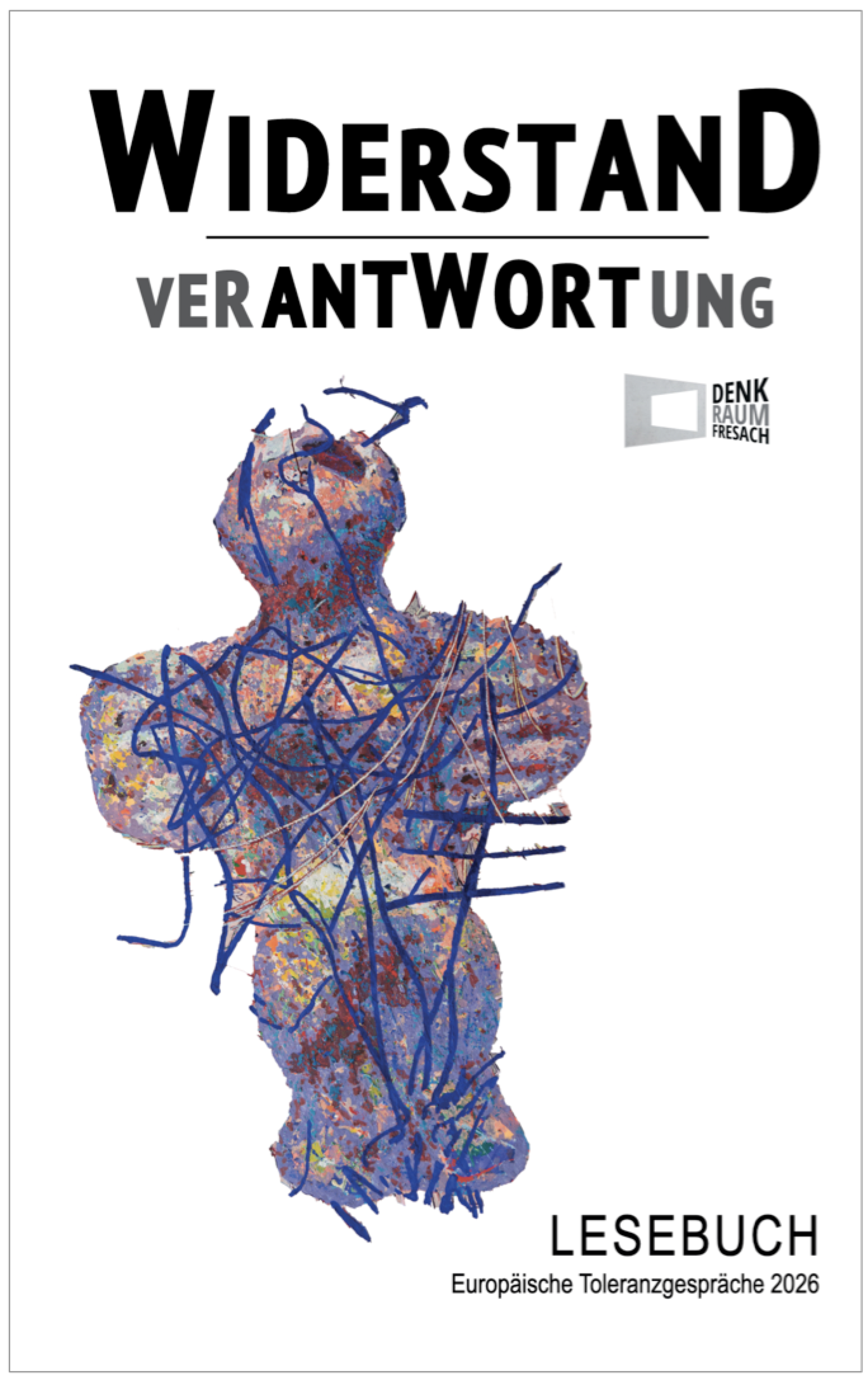
Each year, thinkers gathered for the “European Tolerance Talks” in the Carinthian mountain village of Fresach offer a snapshot of Europe’s current state of mind; a collection of the most significant statements, analyses, and ideas from these discussions is now available. The book *Resistance and Responsibility | Those at the Top, Us Down Here* hits shelves today, capturing a substantial portion of the dialogues held in 2026.
“Resistance, yes—but please, without any casualties”—with this slightly ironic title, editor and curator of the Tolerance Talks, Wilfried Seywald, introduces a volume that otherwise engages with various forms of resistance in a consistently serious and profound manner, all under the guiding premise of acting “with/out of responsibility.” It is not a simple matter, he writes; resistance is a highly complex subject, one that only succeeds when it is intelligently organized and practiced with a sense of responsibility.
“Resistance is a rallying cry, an invocation, and a demand all at once,” writes this year’s opening speaker, Doron Rabinovici. The term can be misused—as a justification for violence or as a mask for power. It is, therefore, contentious in several respects, and the very choice of words becomes part of the struggle itself. Yet, as Rabinovici writes, even in ancient times there existed not only a right—but indeed a duty—to disobey whenever a ruler’s commands ran counter to the principles of a higher justice.
The *Lesebuch 2026* (Reader 2026) brings together a collection of significant thinkers from the fields of literature, philosophy, economics, and the sciences. Contributors include journalist Susanne Glass; activists Mina Ahadi and Umyma El Jelede; Big Tech critic Martin Andree; literary experts Gerhard Ruiss and Alfred Woschitz; writer Antonio Fian; ecologists Camilla Haake and Michael Jungmeier; and theologians Ursula Baatz, Ines Charlotte Knoll, Andrea Mattioli, Ferdinand Kaineder, and Arnold Mettnitzer.
This publication, spanning nearly 200 pages, is released by *Edition Denk.Raum.Fresach* and is available for order via the organization’s website as well as through *Books on Demand*: www.fresach.org/publikationen – ISBN: 978-3-605-08381-4. The price is 14.99 euros (6.99 euros for the e-book version).